
Global News Monitoring
Global news monitoring is the continuous process of tracking, analyzing, and interpreting news events from around the world in real time. In an increasingly interconnected world, events in one country can quickly influence political, economic, and social conditions in another. As a result, news organizations, governments, corporations, and analysts rely heavily on global monitoring systems to stay informed and make timely decisions.
Evolution of Global News Monitoring Systems
Global news monitoring has evolved significantly from traditional wire services to advanced digital intelligence platforms. In earlier decades, international news was primarily distributed through agencies like Reuters and Associated Press, which gathered reports from correspondents stationed in different countries.
These reports were then transmitted via telegraph, radio, or print distribution, often with delays. While effective for the time, this system had limitations in speed and coverage.
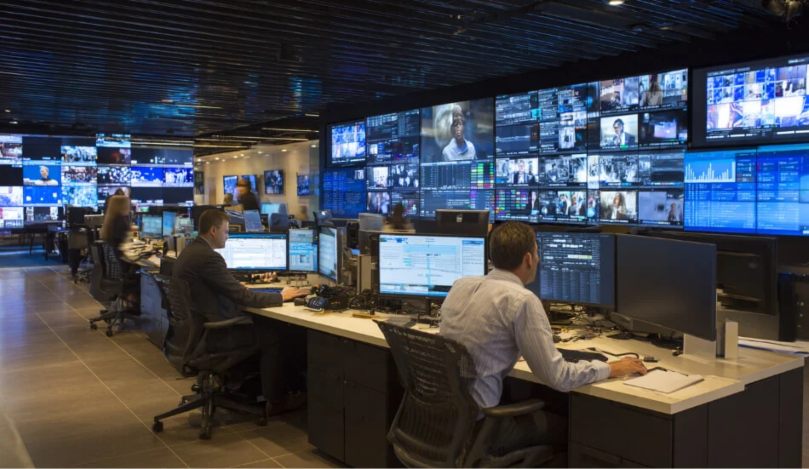
Today, global news monitoring is driven by digital technology. News is collected from thousands of sources simultaneously, including online news portals, social media platforms, government websites, and live broadcasts. Automated systems scan and categorize information in real time, allowing users to receive instant updates on global events.
This transformation has made global awareness faster and more comprehensive, enabling organizations to respond quickly to international developments.
Role of Technology in Real-Time Information Tracking
Technology plays a central role in modern global news monitoring. Advanced software systems use artificial intelligence and machine learning to scan massive volumes of data from around the world.
These systems identify breaking news, detect trending topics, and filter relevant information based on keywords, locations, and user preferences. This allows analysts and journalists to focus on meaningful insights rather than manually searching for updates.
Social media platforms also contribute significantly to real-time monitoring. Events often surface on platforms like X, Facebook, and YouTube before being reported by traditional news outlets. This makes social media a critical source for early alerts and eyewitness accounts.
However, the speed of digital information also introduces risks such as misinformation and unverified content. To address this, news organizations use verification tools to cross-check sources, validate images and videos, and confirm the authenticity of reports before publication.
Satellite imagery, data analytics, and geolocation tools further enhance global monitoring by providing visual and scientific evidence of events such as natural disasters, conflicts, and environmental changes.
Importance of Global Monitoring for Decision Making
Global news monitoring is essential for decision-making across multiple sectors, including government, business, finance, and security.
Governments rely on international news tracking to monitor diplomatic relations, security threats, and geopolitical developments. Early awareness of global events allows policymakers to respond effectively and develop appropriate strategies.
In the business world, companies use global monitoring to track market trends, economic shifts, and supply chain disruptions. For example, changes in trade policies or political instability in one region can directly affect global markets and investment decisions.
Financial institutions also depend on real-time news to monitor stock markets, currency fluctuations, and commodity prices. Even minor global events can have significant financial impacts, making timely information crucial.
Humanitarian organizations use global monitoring to respond to crises such as natural disasters, wars, and health emergencies. Rapid information helps them coordinate relief efforts and allocate resources efficiently.
Challenges in Global News Monitoring
Despite its advantages, global news monitoring faces several challenges. One of the biggest issues is information overload. With thousands of news sources publishing content every minute, filtering relevant and accurate information becomes increasingly difficult.
Another challenge is language diversity. News originates from different parts of the world in multiple languages, requiring translation and contextual understanding. Automated translation tools help, but they may not always capture cultural nuances or accuracy.
Misinformation is also a major concern. False or misleading news can spread quickly across digital platforms, especially during crises or political events. This can lead to confusion, panic, or incorrect decision-making.
Time zone differences and regional reporting standards can also create inconsistencies in how news is interpreted globally. What is considered urgent in one region may be less significant in another.
To overcome these challenges, organizations rely on advanced filtering systems, human analysts, and verification protocols to ensure reliability and relevance.
The Future of Global News Monitoring
The future of global news monitoring is closely tied to advancements in artificial intelligence, automation, and predictive analytics. AI systems are expected to become more accurate in identifying breaking news, predicting trends, and analyzing global events before they fully unfold.
Personalized news monitoring will also become more common. Users will receive customized global updates based on their interests, industries, or geographical focus.
Real-time translation tools will improve accessibility, allowing users to instantly understand news from any part of the world without language barriers.
Additionally, immersive technologies such as augmented reality and data visualization will enhance how global events are presented, making complex information easier to understand.
Despite these technological advancements, human oversight will remain essential. Critical analysis, ethical judgment, and contextual understanding cannot be fully replaced by machines.
Global news monitoring is an essential part of today’s interconnected world. It enables individuals and organizations to stay informed, respond quickly, and make informed decisions based on real-time global developments. As technology continues to evolve, the speed and accuracy of global monitoring will improve, but the need for careful analysis and verification will always remain at its core.